
Wine storage repair · 7 min read
Sub-Zero Wine Cooler Repair in Saratoga
A Sub-Zero wine cooler drifting warm in Saratoga is usually a sensor, fan, gasket or sealed-system fault — not a lost cellar. The common failures and how each is diagnosed.
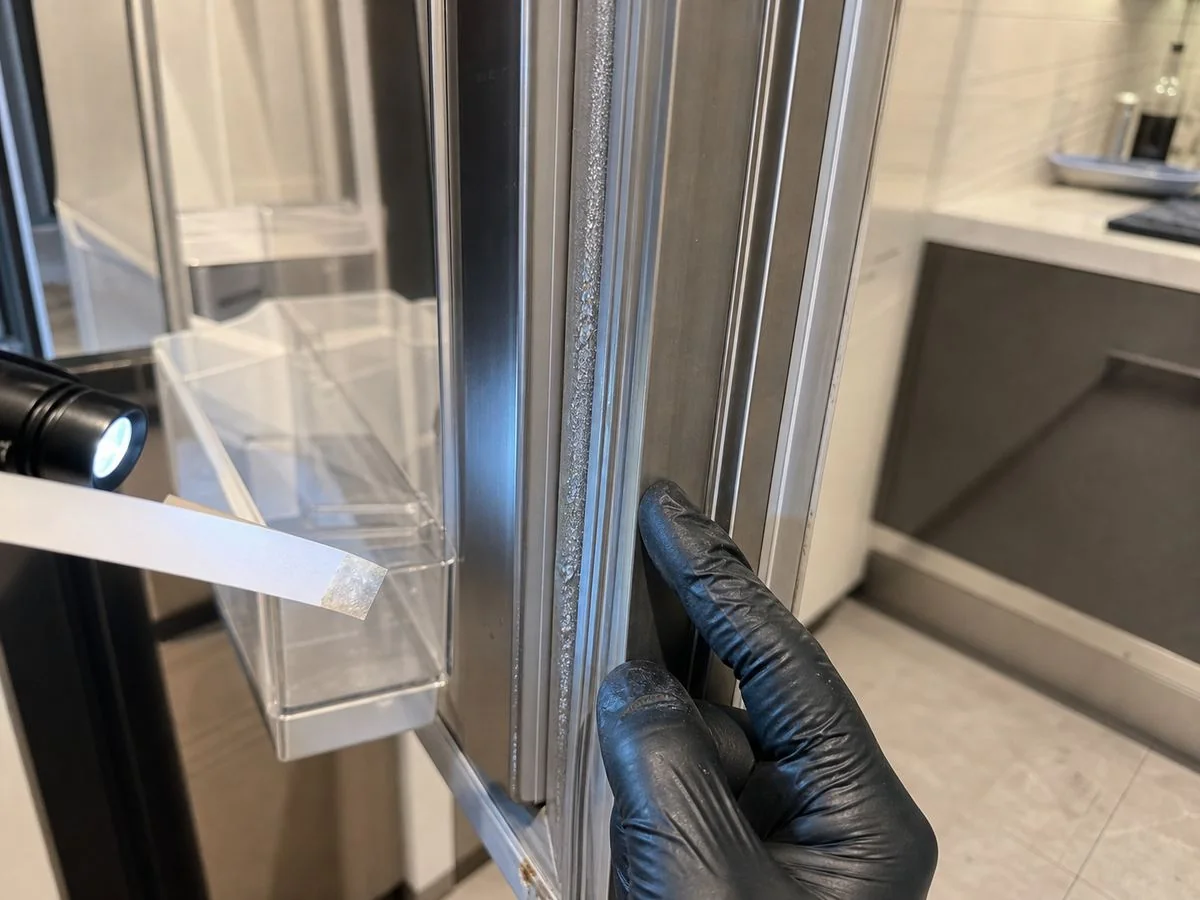
Open a Sub-Zero wine cooler in a Saratoga home and you are usually looking at a collection that took years to build — Santa Cruz Mountains estate bottles, Napa and Sonoma verticals, the kind of thing a foothill cellar is meant to hold for a decade. So the morning the upper zone reads 58 instead of 54, the worry is immediate. The good news is that a wine column drifting out of band is almost always a specific, repairable fault, not the end of the unit.
Sub-Zero builds true built-in wine storage — dual-zone columns and undercounter coolers engineered to hold a far tighter temperature band than a kitchen refrigerator. That precision is exactly why a small fault shows up as a noticeable drift, and why getting the right part back in matters.
Why the zones drift first
A dual-zone Sub-Zero wine cooler holds two independent set points — typically a cooler reds-and-whites band up top and a slightly warmer band below, or the reverse depending on how it's configured. Each zone leans on its own thermistor reporting back to the control board. When one of those sensors ages and starts reading low, the board thinks the zone is colder than it is and eases off, so the real temperature creeps up. A single drifting zone with the other holding steady is the classic signature of a failing dual-zone sensor, and it's one of the most common calls we run in Saratoga.
Saratoga's big diurnal swing plays into this. Summer afternoons in the foothills push well into the 90s while nights drop sharply, so the room around a wine column is rarely as stable as the cellar it's pretending to be. A unit fighting that swing all day surfaces a marginal sensor or a tired control board sooner than a unit in a steady, conditioned space.
Airflow, gaskets and the glass door
Wine coolers move air gently and constantly, and several failures show up as warm drift without any dramatic noise. A condenser coil loaded with the fine grey dust that drifts off the foothill roads above Saratoga Village makes the compressor work harder and run longer — and the same late-summer wildfire smoke that mats a kitchen Sub-Zero's coil does it here too. An evaporator or circulation fan that's slowing down leaves the lower zone warm while the top reads fine. And the door is its own system: the gasket has to seal a tight band, and the UV-tinted glass panel has a seal of its own. A gasket that no longer pulls flush, or a degraded glass seal, lets warm room air leak in and the compressor never quite catches up.
There's also a quieter Saratoga-specific concern. A compressor or fan starting to vibrate doesn't just risk a sealed-system fault — the constant tremor disturbs sediment in older reds resting in the column. If a unit that used to run silently has picked up a hum, that's worth a look before it costs you both a repair and a case of cloudy bottles.
The sealed system, and repair versus replace
At the far end is the sealed system — the compressor and refrigerant loop. A unit that runs constantly and still can't reach set point, or one that's lost its cool entirely, points here. We put gauges on it and read the actual pressures before recommending anything, because this is the one repair where the honest answer occasionally is that an old unit isn't worth it. Everything short of that — a thermistor, a fan, a control board, a gasket, a glass seal — is a bounded part well under the cost of a new built-in column plus installation, and these units are built to run many years past the fix.
We work independently — not factory-authorized — on built-in Sub-Zero wine storage across Saratoga, and every visit starts with the $89 diagnostic that applies toward the repair. If you'd rather book than call, the online scheduler handles it; otherwise the phone is the fastest way to get a real diagnosis on the calendar.